
Newsletters
From the Rector's Desk:
Quieting the Soul this Lent 2014
The latest Oxford American Dictionary, defines “soul” as: the spiritual or immaterial part of a human being, often regarded as immortal…the moral or emotional or intellectual nature of a person or animal. As Christians we focus on that first definition—the soul as that which is at the very heart of our being. The soul is the very essence of who God created us to be, and it is the soul to which God continues to call for us to become all that we can be..
Reflect on these “soul” references from Scripture:
Genesis 2:7—And the Lord God formed man of the dust of the ground, and breathed into his nostrils the breath of life; and man became a living soul.
Deuteronomy 6:5—And thou shalt love the Lord thy God with all thine heart, and with all thy soul, and with all thy might.
Psalm 23:3—He restoreth my soul.
Psalm 42:2—My soul thirsteth for God.
Psalm 103:1—Bless the Lord, O my soul, bless his holy name.
Matthew 11: 28-30—Come unto me, all ye that labour and are heavy laden, and I will give you rest. Take my yoke upon you, and learn of me; for I am meek and lowly in heart: and ye shall find rest for your souls.
There is a cartoon in the “The New Yorker,” magazine that shows a man lying on a sofa. Alongside the sofa there is an empty chair. Then you notice, the man lying on the couch is holding onto a pad and pencil. Ever feel that way about where your soul is? So the question becomes perhaps, how do we quiet the soul? Stated in an even clearer way is how can we nurture our souls this Lent 2014?
Perhaps we need to reinvent the Sabbath in our lives. So much of what we seem to experience today has to do with a sense of Sabbath loss. One of the best images for me of what that once was is found in a particular episode of the 1960’s television series The Andy Griffith Show. The exact image is of Andy and Barney rocking on the front porch following the Sunday Church service having a long discussion as to whether or not Barney will run to the corner drugstore to buy some ice cream!
Dorothy Bass in her classic book, Receiving the Day, writes: When we keep a Sabbath holy, we are practicing for a day, the freedom that God intends for all people. I would push this even further to say that it is one of the fundamental ways that we quiet and nurture our souls. So how do we proceed?
Sabbath keeping can be different for each of us—our souls are unique and fed differently. Yet there are some fundamental practices that each of us needs to pursue. We begin with setting aside the time—dedicated time specifically for our souls. Do you have a day during the week where you do not work in any way, and do not do activities that cause you to worry? Things like paying bills…checking e-mails…scrolling though Facebook…voicemails…returning phone calls…checking your calendar; all of these are really non-Sabbath activities. And all of these activities are those that do not quiet and nourish the soul. Are you able to set one day and specifically one hour aside each week to worship God?
Thomas Merton writes in his classic, The Seven Storey Mountain about one night, during his stay in Rome, when he experienced a spiritual awakening:
I was in my room. It was night. The light was on. Suddenly it seemed to me that Father, who had been dead more than a year, was there with me. The sense of his presence was as vivid and as real and as startling as if he had touched my arm or spoken to me. The whole thing passed in a flash, but in that flash, instantly, I was overwhelmed with a sudden and profound insight into the misery and corruption of my own soul, and I was pierced deeply with a light that made me realize something of the condition I was in, and I was filled with horror at what I saw, and my whole being rose up in revolt against what was within me, and my soul desired escape and liberation and freedom from all this with an intensity and an urgency unlike anything I had ever known before. And now I think for the first time I really began to pray—praying not only with my lips and my imagination, but praying to the God I had never known, to reach down towards me out of His darkness and help me get free of the thousand terrible things that held my will in their slavery. (p.111) Thomas Merton’s soul became quiet for the first time and God simultaneously began to nourish it.
May you find ways to quiet and nourish your souls—may you begin by reinventing the Sabbath in your life.
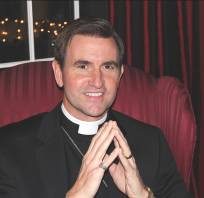
Father Philip+
From the Senior Warden Vicki Duff
 I’m writing this at the end of a warm February Saturday. Next week could be cold and snowy or icy again. But today the sun has shone and I’ve glimpsed some signs of spring. I saw a robin on my walk, and there are 3 new calves in the field behind our house. And I was very surprised to see some tulip leaves just above ground. A planter of succulents I put on the patio last summer is leafing out; I’m hoping these little plants survive the next wave of winter.
As we move into Lent on Ash Wednesday, March 5th, I know many of us will be considering what we can do to deepen our faith by giving up something that perhaps gets in the way of a faithful life, or taking on something to deepen our lives of faith. Everyone is so busy these days, it’s hard to think of taking on something new, but just adding a few minutes to focus and pray can so enrich our lives and our faith.
Every year Ash Wednesday is on a different date, as is Easter, but every year we do the same things in this season. We fatten up on pancakes on Shrove Tuesday, courtesy of the Men’s Club. We humble ourselves at Ash Wednesday services, ashes to ashes, dust to dust. And we wait, we repent, we worship. We seek the ways we can grow in our relationship with God, whether by giving up or taking on…whatever it is we need to do. In this season, that seeking is intentional, more fervent than in any other.
The atmosphere in our church reflects this intentional seeking; there are no altar flowers, no alleluias, and our music is contemplative.
All the while, we will be watching spring unfold this year, with its promise of warmer days, green grass, new leaves, and all the beauty of God’s creation in flowers, foals, birdsong and bee-buzz. I pray for a grateful heart, to see and love and give thanks for all the beauty around me. And I pray for a caring heart, to see and tend to all that’s not so beautiful around me—I pray to know how and when to help make things better.
And always, in every season, I give great thanks for you, the people of St. John’s. We are truly blessed to have such a lovely church filled with kind and loving people. I have been blessed with a wonderful family—parents, sisters, children and grandchildren, even in-laws! But you, my church family, enrich my life in ways I can’t describe. My cup runs over.
God bless us, every one, as we journey together into Lent. Let us each find the way closer to the heart of God, and grow closer to each other as well.
God’s Peace-
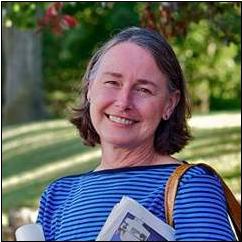
Vickie Duff
Senior Warden
♪ NOTES FROM BILL ♫
THE FARMER’S WIFE
There is an old story about a farmer’s wife who loved her milk cow, and treated it as if it were a pet. Her husband viewed the cow as a farm asset, and often teased her about her affection for the milk cow. One day when the farmer was returning from his chores, he noticed that his wife, as she was finishing her milking, planted a kiss on her cow’s forehead. He laughed and said to her, “I guess you would rather kiss the cow than me.” She smiled and replied, “Yes, I would. It’s a matter of taste.”
You might wonder what this story has to do with music in the parish. There are many styles of music written for the church; choral music for choirs, praise music, hymns, gospel songs, contemporary Christian music, spirituals, chant, and so much more. Each person in our parish, or any parish, is moved spiritually by either a particular style of Christian music or a group of styles. It is also true that there are certain styles of church music that the same parishioner would not like as well, or at all. As the farmer’s wife in the story above indicates, it is truly a matter of individual taste.
It is highly unlikely that any of us could find a parish where everyone, young or old, high church or low church, would all agree on one particular kind of music for the church. In my thirty-plus years as an organist/choirmaster, I have never seen a parish where everyone in the parish likes the same kind of music. We can view this as the Apostles viewed the church at large in Acts, chapter 11. Peter was criticized by some of the Jewish Christians for taking the Gospel to the Gentiles (that would be US !), because they considered the Gentiles ‘unclean’ and unworthy of the faith. But when they heard the stories of how those non-Jews had responded to the Gospel of Christ, they were moved to accept that folks from another style of life (uncircumcised, not keeping the kosher dietary laws, not Jewish, not followers of the law of Moses, etc.) could also be a part of their faith in Christ. As those early Jewish Christians learned to accept those who had a different view of the devout life, so must we learn to accept and respect the varied styles of worship and music in our faith tradition.
At St. John’s, we practice our faith utilizing both the traditional Anglican/Episcopal service (Rite I) on the second and fourth Sundays of the month, and the more contemporary Anglican/Episcopal service (Rite II) on the first, third, and fifth Sundays of each month. This is in many ways a gift from God. Many parishes utilize one or the other, but rarely both. By utilizing both the traditional and the contemporary, it greatly expands the kinds or styles of music that can be used in our worship.
As your organist/choirmaster, I have worked to make the music for our Rite I services very traditional while expanding it to include Episcopal/Anglican music from the nineteenth and twentieth centuries (Stainer, S.S. Wesley, Sowerby, Goodall, Billings, which was lacking), from both America and England. The choir will continue to utilize traditional music from earlier periods of Anglican music (Tye, Tallis, Farrant) as well. I also returned our Rite I services to the most traditional way of using double Anglican Chant for the Psalms, utilized some of our most traditional hymns from the Hymnal 1940, and will be using better quality settings for the service music. (For those of you who prefer Rite I, that means that the Merbeck setting will go back to the 1940 hymnal version, in a higher key, and more uplifting, as well as using the Sowerby setting more). My goal is to make the Rite I service more singable and uplifting while keeping it quite traditional. As with hymn selections, better congregational singing of the service music (the Sanctus, Agnus Dei, the Gloria, etc.) is always on my mind when deciding what to use. You folks have really started singing the Psalm during our Rite I services, so after multiple requests, I will introduce one more Anglican Chant musical setting for the Psalms to give some variety in our psalmody. All of this has been approved following consultation with our Rector, Father Philip.
I am in the process of expanding the possibilities for newer, more tasteful music for our Rite II services. This fall, I will be introducing more “praise music” into the Rite II services, including some of my own arrangements, as well as spirituals, contemporary Christian music, and new communion music. (Fear not, members of the Parish Choir!! It will be scored for parts, SATB. If it isn’t, I will re-write it in parts for the choir). Our senior warden, Katherine Harper, provided me with wonderful psalm settings for Rite II by Betty Carr Pulkingham, which we may use on occasion in Rite II. These are approved for use in the Episcopal Church for Rite II services. In doing newer music for the church for Rite II services, it is incumbent on us all to remember that this is an Episcopal Church. Any contemporary or praise music that espouses theology not in keeping with the theological positions of the Episcopal Church will not be used in our worship. An excellent example for us to follow is the music for the offertory and communion that occurred on July 28, when singers, both from and not from the choir, joined together to do some beautiful and tasteful praise music for our worship on that Sunday. During our summer music program, we have been utilizing other musicians in the church who play instruments including guitar, mandolin, string bass, flute, and violin along with the piano. Some of these folks are professional musicians including our very own Teresa Range…aka….Derby Laine, who along with her husband John operate a recording studio. What a gift this is!! When the choir is in session, from September through May, we will continue to utilize these instruments ONLY for Rite II services.
It is my honor and privilege to be your organist/choirmaster, and to serve our Lord with each of you in this place we call our parish home. I am also quite blessed to serve under Fr. Philip, our Rector, who is so supportive of the music program as we strive for excellence in meeting the musical needs of our parish. As we begin a new season of music in September, let us remember the words of both the psalmist, David, and the hymnist, Fred Pratt Green: “Praise him with the sound of the trumpet; praise him with the psaltery and harp. Praise him with stringed instruments and organs. Let everything that hath breath praise the Lord”……..”that in our music God be glorified.”
William Webber, Organist/Choirmaster
